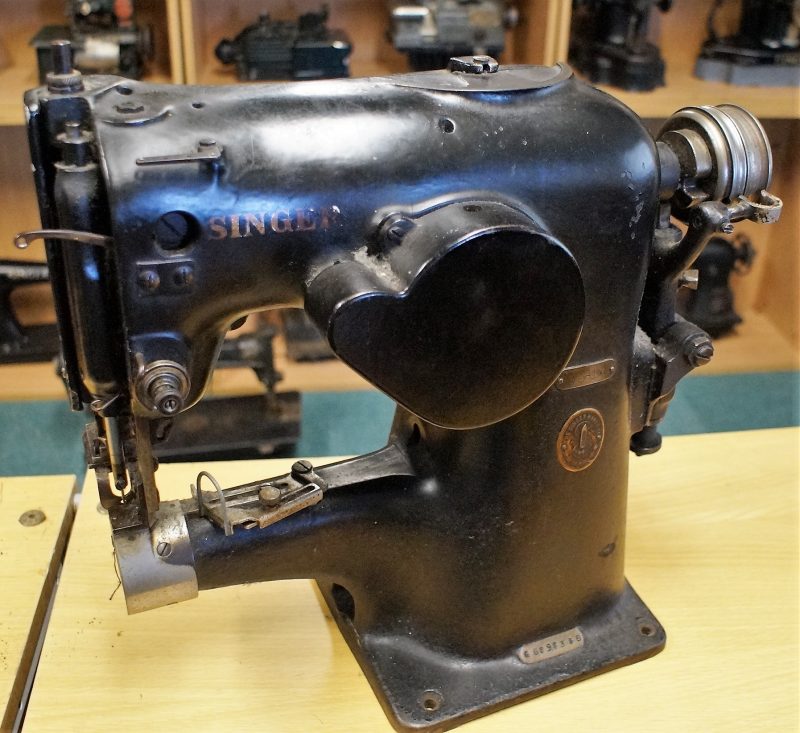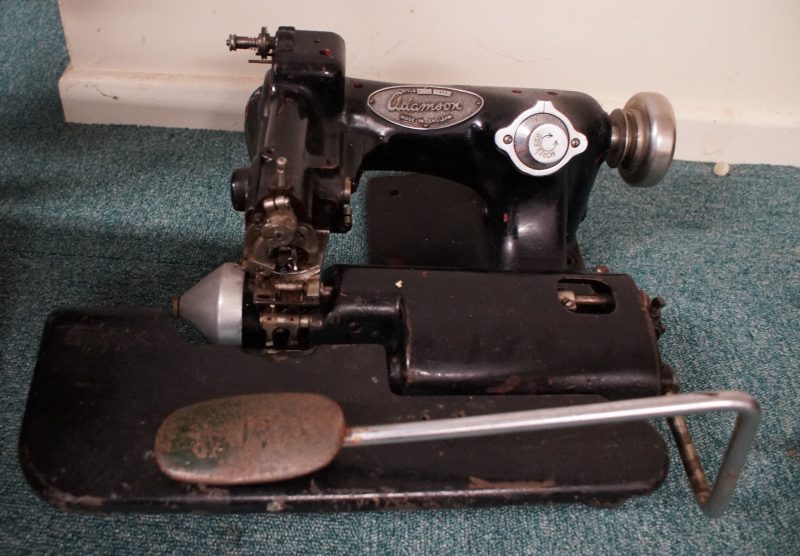
Singer
Circa : 1915
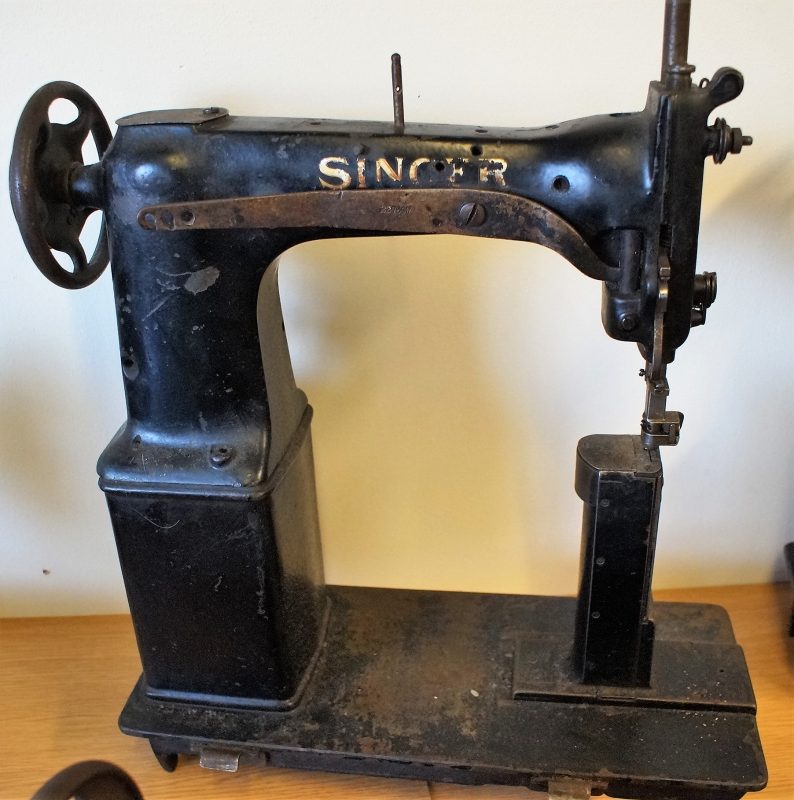
A American Industrial Head Only sewing machine for Cobbler use made in the 1910’s by Singer company
Detail Summary
| Manufacturer: | Adler |
| Country Manufactured: | German |
| Type: | General Use |
| Use: | Domestic |
| Specialist Use: | General |
| Drive: | Hand Crank |
| Feed: | Dogs |
| Bed: | Flat |
| Model | |
| Age Range | 1880's to 1900 |
| Manufactured Date |
Gallery
Description
Long form description here …. Post bed
A post bed sewing machine is a specialized type of industrial sewing machine known for its unique design and functionality. It’s called a “post bed” due to the vertical column or “post” positioned at the end of the machine’s sewing surface where the needle and feed mechanism are mounted.
Here are the key features and characteristics of a post bed sewing machine:
- Vertical Column (Post Bed): The defining feature of this machine is the vertical column at the end of the sewing surface. This vertical post allows for better access and visibility when sewing intricate or curved pieces of fabric, such as those found in shoe uppers, leather goods, or other three-dimensional items.
- Sewing Surface: The sewing surface or bed is narrower than that of flat bed sewing machines. This design allows for easier manipulation and stitching of materials that might be challenging to sew on a flat surface.
- Needle and Feed Mechanism: The needle and feed mechanism are mounted on the vertical post. This setup allows the needle to reach areas that might be inaccessible on a flat bed machine, making it ideal for intricate and detailed stitching.
- Versatility: Post bed machines are used for specialized sewing applications, such as attaching decorative elements, sewing curved seams, stitching on three-dimensional items like bags or shoes, and handling materials that require precision and control.
- Applications: These machines are commonly used in industries such as shoe manufacturing, leather goods production, upholstery, and crafting items that have intricate designs or curved surfaces.
- Attachments and Accessories: Post bed sewing machines can be equipped with various attachments and accessories, including specialized presser feet, guides, and thread trimming mechanisms, enhancing their versatility for different sewing tasks.
- Precision and Control: The vertical orientation of the post bed sewing machine allows for better control and accuracy when navigating complex patterns or seams, enabling the operator to achieve precise stitching on various materials.
Post bed sewing machines are valued for their ability to handle challenging sewing tasks that require maneuverability and precision on curved or irregular surfaces. Their specialized design makes them indispensable in industries that produce items with intricate designs and unique shapes, allowing craftsmen to achieve high-quality stitching in specialized applications.ines are available in both foot-operated (treadle) and motorized (electric) versions, depending on the operator’s preference and the specific application.
8. **Twin Needle Capability**: Some post bed sewing machines are equipped with twin needle capabilities, allowing for parallel stitching and greater versatility in design.
These machines are commonly used by shoemakers, leatherworkers, upholsterers, and other craftsmen who require precise, three-dimensional sewing. The post bed design makes it easier to access hard-to-reach areas and maintain control over the workpiece during sewing, which is essential for achieving high-quality, professional results in various applications.
Location
First gallery on entering the museum. Early period machines, dated from 1870’s to 1880. Also on display are some un-restored as found machines in a poor condition, unwanted and unloved! The museum is filled with fine examples of saved machines in original condition. Only light restoration is carried out to maintain condition for the museum.